
Gary and Angela Williams, who live in Overton, Lancashire, were strolling along Middleton Sands beach nearMorecambe Bay when they detected a smell of rotten fish.
Following the smell, they found a strange-looking “stone” that appeared to be a piece of ambergris, also known as “whale vomit,” used in perfume production.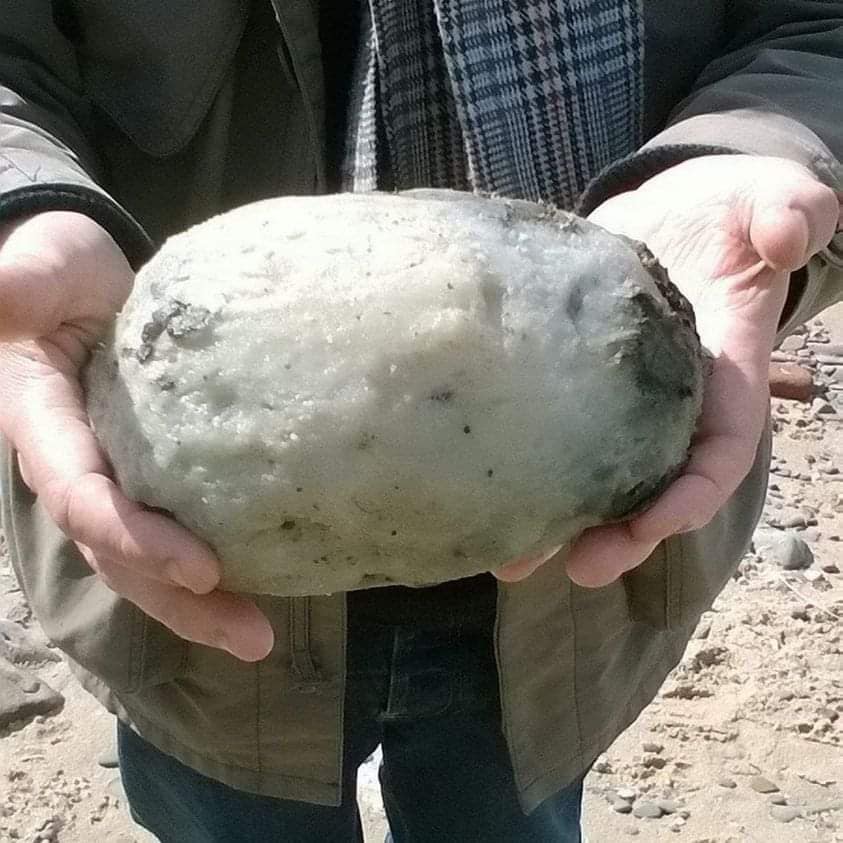
After reading in a newspaper about this highly sought-after chemical substance, the couple brought the large piece home wrapped in a scarf. Gary and Angela Williams, who live in Overton, Lancashire, were strolling along Middleton Sands beach near Morecambe Bay when they detected a smell of rotten fish.
Following the smell, they found a strange-looking “stone” that appeared to be a piece of ambergris, also known as “whale vomit,” used in perfume production.
Gary, 48, then placed the piece on his fishing scales and discovered it weighed 1.57 kg, slightly smaller than a piece found in the Morecambe region several years earlier.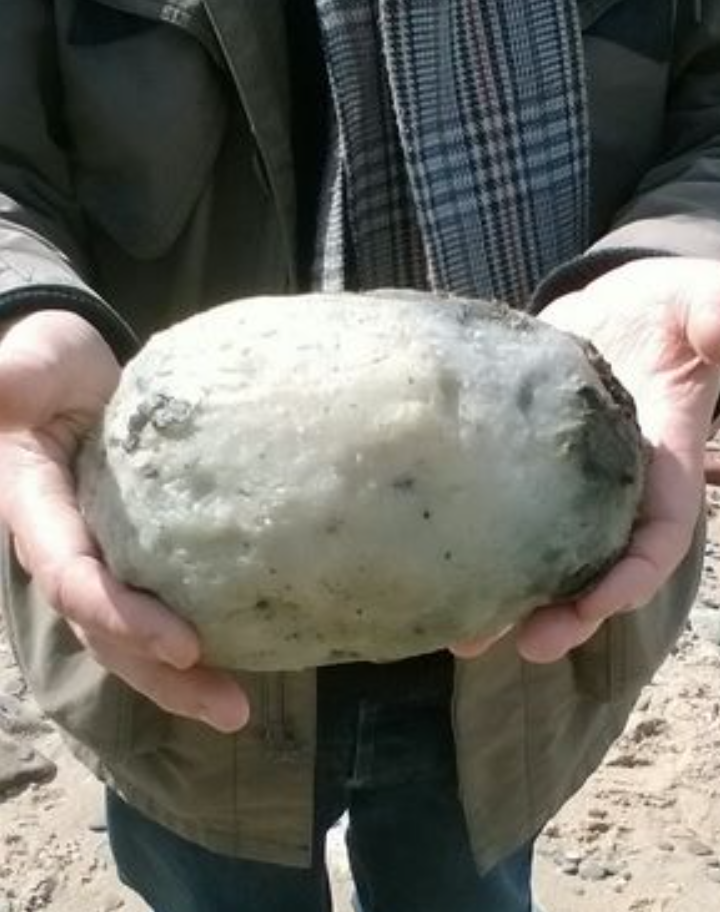
The previous “whale vomit” piece sold for an astonishing price of £120,000 in 2013.
Gary and Angela, a 49-year-old nurse, are currently in talks with potential buyers about this newly discovered mass. The stone is the size of a rugby ball.
Due to its rarity and significant value to perfume makers, ambergris, created from the hardened feces of a sperm whale, is sometimes called “floating gold.”
The material takes years to form and is believed to protect the animal from hard and sharp objects it ingests.
It can float in the ocean for a long time before reaching the shore. After being exposed to the sun and saltwater for an extended period, it turns into a smooth, gray, compact rock.
The discovery made by Gary, an engineer, and his wife was “a bit shocking.”
According to him, it was in a section of the beach where very few people used to walk.
“Although it smells terribly bad. It has a very distinctive smell that is similar to a mix between farm manure and squid.
“It has the texture of a very hard rubber ball. It has a waxy feel, similar to a candle.
“The wax sticks to your fingers when you touch it.”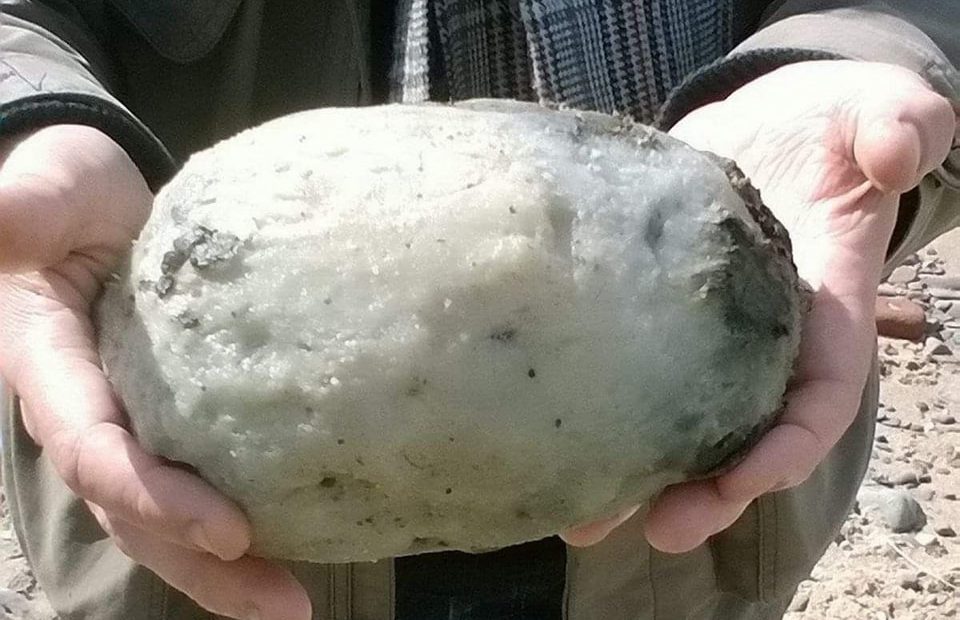
He added, “If it’s valuable, it will help us a lot to buy a static caravan. A dream come true, right?”
When Gary and Angela walk, they often look for interesting objects on the beach.
The 1.57 kg of ambergris was discovered on Sunday, and since then, they have stored it securely while consulting with two experts, one in France and another in New Zealand. The experts estimated the value of the 2.7 kg piece that arrived in Morecambe in 2013 as high as £120,000. In an auction in Macclesfield, Cheshire, last September, a 1.1 kg piece found on a beach near Anglesey, Wales, sold for £11,000.